


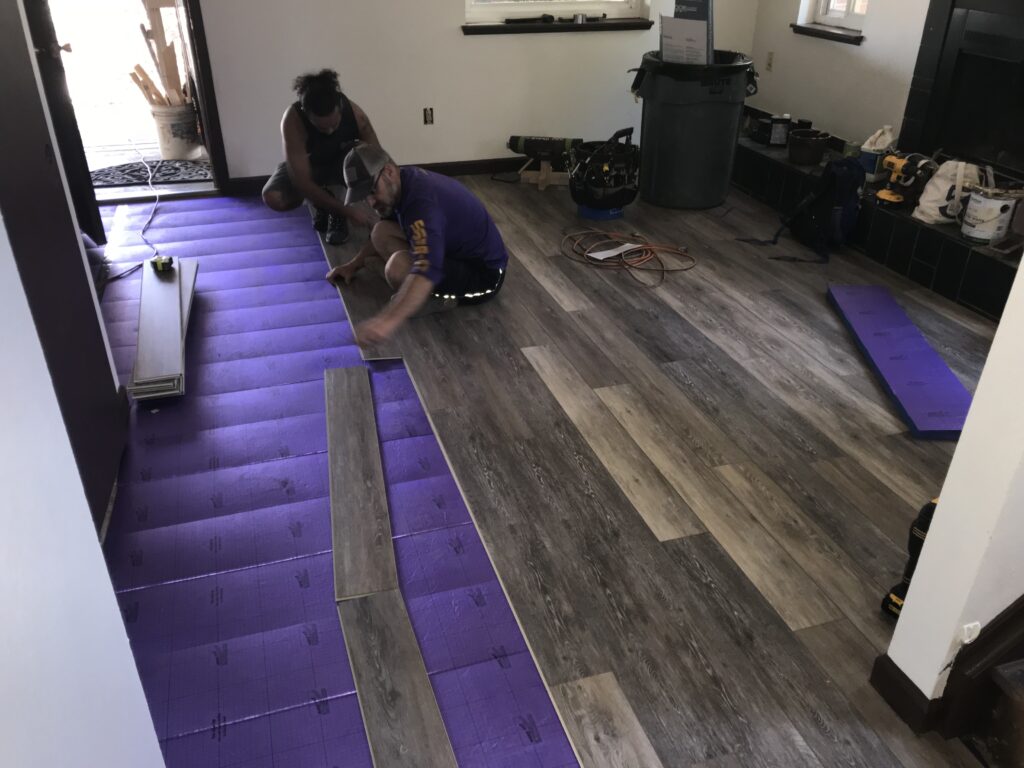
What’s the best underlayment for LVP flooring? Read on to learn which options protect against moisture and improve comfort from Colorado Home Remodeling, trusted remodelers in Northern Colorado.
What’s the Best Underlayment for LVP Flooring?
If you’re upgrading your floors in Loveland, Fort Collins, or anywhere in Northern Colorado, choosing luxury vinyl plank (LVP) is a smart move. It’s durable, waterproof, and looks just like hardwood, without the price tag. But one detail homeowners often miss? The underlayment beneath it.
That thin, hidden layer determines how your floor feels, sounds, and performs for years to come.
Why Underlayment Matters for LVP Floors
Even though LVP is a floating floor, it still needs support. A good underlayment:
- Cushions your step for a softer feel.
- Reduces sound transfer between rooms or floors.
- Protects against moisture from concrete or crawlspaces.
- Levels out small imperfections in your subfloor.
It’s the unsung hero of great flooring.
Different Types of LVP Underlayment
Here’s a quick comparison to help you choose what’s best for your project:
| Underlayment Type | Ideal For | Benefits | Drawbacks |
| Foam | General use over wood subfloors | Budget-friendly, reduces sound | Limited moisture protection |
| Cork | Multi-level homes & condos | Excellent sound barrier, eco-friendly | Not waterproof |
| Rubber | Basements & concrete subfloors | Great moisture protection, durable | Higher cost |
| Felt | Uneven subfloors in older homes | Cushions and smooths imperfections | Not waterproof |
| Pre-Attached Pad | LVP with built-in backing | Quick install, no extra layers | Often too thin for moisture control |
Important: Don’t Double Up
If your LVP already has attached underlayment, don’t add another layer unless the manufacturer says it’s okay. Too much cushion can cause movement and ruin your floor’s locking system. Always check the manufacturer’s warranty before installation.
Best Underlayment for Concrete Subfloors (Basements & Slabs)
Here in Northern Colorado, many basements sit on concrete. The key here is moisture control.
Use:
- Rubber underlayment for superior moisture blocking, or
- Foam with an integrated vapor barrier for affordable protection.
And if you want to go belt-and-suspenders, lay down a 6-mil polyethylene vapor barrier beneath it. Concrete loves to surprise you with moisture, especially during freeze-thaw cycles.
Best Underlayment for Wood Subfloors (Main & Upper Levels)
If your main levels have wood subfloors, prioritize sound reduction and comfort.
Foam or cork underlayment is your go-to here. Cork is especially nice if you want to hush the creaks and footsteps between floors.
Matt’s Pick for Northern Colorado Homes
After remodeling countless homes across Northern Colorado, here’s my local-tested recommendation:
➡ 2mm foam underlayment with a built-in vapor barrier.
It’s moisture-resistant, easy to install, and cushioned just enough for everyday comfort.
For basements, go with rubber, because no one likes surprise humidity underfoot.
Final Thoughts: It’s What’s Underneath That Counts
A quality underlayment transforms how your LVP looks and feels and protects your investment. Don’t skip it or grab the cheapest roll from the hardware store. The right choice will save you headaches down the road.
If you’re not sure which one fits your home best, Colorado Home Remodeling can guide you through it, whether you’re redoing a basement in Loveland or giving your Fort Collins kitchen a facelift.
Ready to Upgrade Your Floors?
Contact Colorado Home Remodeling today for expert flooring, basement, and full-home remodeling services in Northern Colorado.
Let’s make your home look (and feel) better from the ground up!


Leave a Reply